
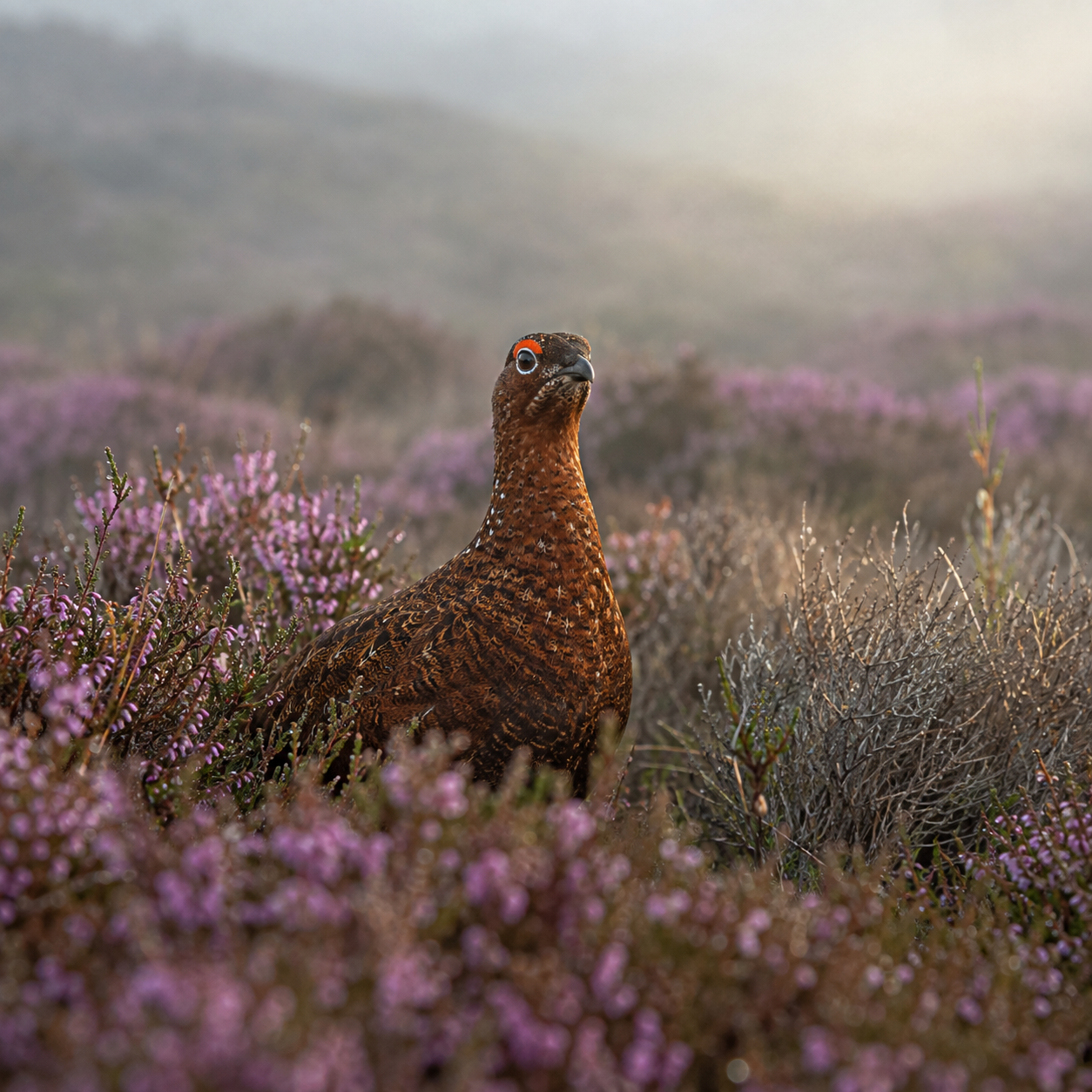
Cautious Optimism on the Moor: The Outlook for Grouse in 2026
The red grouse season opened on 12 August with a renewed sense of optimism across parts of Britain’s uplands. After two difficult seasons, brood counts from several carefully managed moors in northern England and southern Scotland suggest grouse numbers have improved.
The picture is not the same everywhere, but early reports provide a welcome sign that some populations are beginning to recover.
Encouraging Brood Counts
A cold and wet spring caused widespread nesting failures in 2024, followed by only a partial recovery during 2025. This year, some keepers have reported their strongest brood averages since 2023.
However, grouse numbers can vary considerably between neighbouring moors. Decisions about whether shooting should take place—and at what level—must therefore be based on local counts rather than the national outlook.
Responsible grouse management is not about taking the largest possible bag. It means monitoring breeding success, protecting suitable habitat and only shooting where there is a genuinely sustainable surplus.
Challenges Across the Moor
Despite the improved counts, the uplands continue to face considerable pressure.
Heather beetle outbreaks can strip large areas of heather, reducing both the young shoots grouse rely on for food and the thicker cover needed by vulnerable chicks. Hotter conditions may also be allowing these outbreaks to become more frequent and severe.
Exceptionally dry weather has created another challenge. England and Wales experienced their driest July in around 190 years, leaving moorland vegetation and peat increasingly vulnerable to wildfire.
For many upland keepers, protecting the moor from fire has become just as important as preparing it for the season.
More Than a Day’s Shooting
The improving grouse counts demonstrate how careful, year-round management can support wild bird populations. Habitat monitoring, conservation work, predator control where appropriate and disease surveillance all contribute towards keeping the moor healthy.
The 2026 season may have begun with brighter prospects, but it also highlights the importance of restraint. Every moor is different, conditions can change quickly and some shoots may still choose to reduce their days—or not shoot at all.
Ultimately, the future of grouse shooting depends on healthy habitats, sustainable populations and responsible decisions. This season’s early optimism is encouraging, but looking after the moor must always come first.


Leave a comment
This site is protected by hCaptcha and the hCaptcha Privacy Policy and Terms of Service apply.